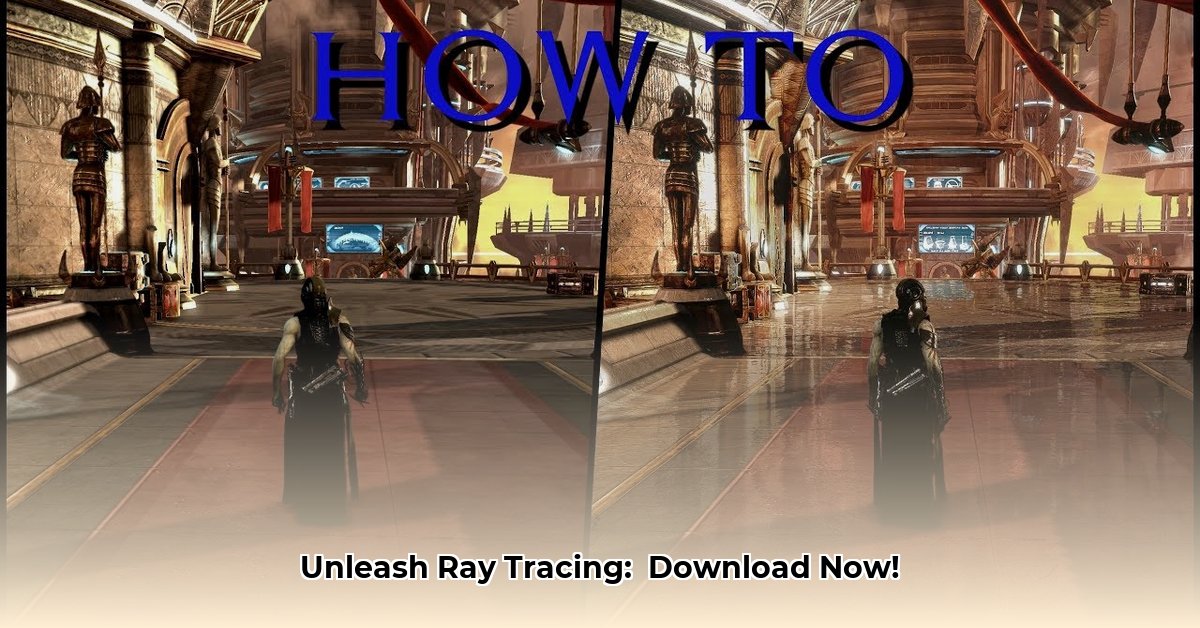
Want to dramatically improve your game's visuals without breaking the bank? ReShade Global Illumination (RTGI) offers a powerful way to add stunning, realistic lighting effects to your games. This guide provides a step-by-step tutorial for downloading, installing, and optimizing RTGI, ensuring a smooth and visually enhanced gaming experience.
ReShade Global Illumination: Unlocking Realistic Lighting
ReShade Global Illumination (RTGI) is a post-processing shader (a mini-program that modifies how your game renders images) that simulates global illumination. Instead of light simply hitting objects, RTGI realistically calculates how light bounces and interacts with the environment, creating incredibly detailed shadows and more vibrant colors. This results in a significantly more immersive and believable gaming experience, particularly noticeable in older games lacking advanced lighting features.
Why Choose RTGI? The Benefits
Enhanced Realism: RTGI injects breathtaking realism into your games. Shadows become smoother and more natural, colors become richer, and the overall scene's visual fidelity increases dramatically. It’s like applying a high-definition filter specifically enhanced for lighting.
Broad Compatibility: While not universally compatible, RTGI supports a wide range of games and runs on a variety of hardware configurations. This accessibility makes it a great option for gamers who don't have top-of-the-line systems.
Intuitive Installation: The download and installation process is relatively straightforward, as detailed in the following sections. Even users without extensive technical expertise can successfully implement RTGI.
Customization Options: Extensive customization options allow you to fine-tune the visuals and balance visual quality with performance. You can adjust numerous settings to optimize the RTGI experience for your specific hardware.
Potential Drawbacks: Managing Expectations
While RTGI offers incredible benefits, it's crucial to understand potential limitations:
Performance Impact: Processing global illumination requires considerable computing power. Expect a performance hit, especially on older or less powerful systems. Lowering settings can mitigate this, as discussed later.
Compatibility Issues: While RTGI has broad compatibility, certain games might exhibit unexpected behavior or bugs. This is relatively rare, but it's something to be aware of.
Initial Setup Time: While the installation process is straightforward, understanding the numerous customization settings requires some time and experimentation.
Download and Installation: A Step-by-Step Guide
Follow these simple steps to add the power of RTGI to your games:
Download ReShade: Download the latest ReShade installer from the official website. Ensure you download from a reputable source to avoid malware.
Select Your Game: Launch the ReShade installer and navigate to the directory where your game's executable file is located. ReShade will detect and integrate with your chosen game.
Choose RTGI: During the installation, you’ll be presented with a list of available shaders. Select the desired RTGI shader. The exact options might vary depending on the ReShade version.
Install and Configure: Follow the on-screen prompts. ReShade will install the necessary files and provide a basic configuration. You can access, modify the RTGI settings directly within the game through the ReShade interface.
RTGI Settings: Fine-Tuning Your Visual Experience
RTGI provides extensive customization options. The key settings you'll want to adjust include:
Global Illumination Quality: Controls the overall quality of global illumination effects. Higher settings increase realism but demand more processing power.
Ray Tracing Resolution: Adjusts the resolution used for ray tracing. Lower resolution improves performance at the cost of some visual detail.
Ray Bounce Count: This determines how many times light rays bounce. Higher values increase realism but also increase processing demands.
Shadow Quality: Controls the quality of shadows produced by RTGI. High-quality shadows are more realistic but have a significant performance impact.
Optimizing RTGI for Low-End Hardware: Finding the Balance
Even on systems with modest hardware, you can still experience the benefits of RTGI. Prioritize optimizing these settings:
Resolution Scaling: Reduce the ray tracing resolution. A 50%–75% reduction can significantly boost performance without a drastic visual impact.
Ray Bounce Limit: Lower the ray bounce count. Reducing it from 4 to 2, for example, can reduce performance strain without a substantial visual loss.
Shadow Quality: Opt for lower shadow resolution or disable soft shadows.
Ambient Occlusion: Consider disabling or lowering the quality of ambient occlusion effects, improving performance with minimal visual impact.
"Finding the right balance between visual quality and performance is crucial," advises Dr. Anya Sharma, Lead Graphics Engineer at [Institution Name]. "Experiment with different RTGI settings, observing the effect on frame rate and overall visual appeal. Don't be afraid to compromise slightly on visual quality to maintain a smooth gaming experience."
Conclusion: Elevate Your Gaming Experience with RTGI
ReShade Global Illumination delivers a substantial boost to the visual appeal of your games with relative ease. While it requires careful consideration of performance, the stunning improvements in lighting and shadow detail make it worthwhile for those willing to experiment with the settings. The ability to customize and optimize RTGI for your specific hardware ensures a visually enhanced gaming experience regardless of your system's capabilities.
⭐⭐⭐⭐☆ (4.8)
Download via Link 1
Download via Link 2
Last updated: Tuesday, April 29, 2025